Mastery Over Ownership
For many exotic car owners, the relationship with their car changes over time. At first, it is defined by the obvious things: performance numbers, sound, presence, and the thrill of acceleration that never quite gets old. Modern high-performance cars deliver all of that with remarkable ease. They start instantly, idle smoothly, and deploy extraordinary capability with very little effort from the driver.
Eventually, though, a different question begins to surface. Not how fast the car is, but how well the driver actually understands it.
Most exotic cars today are engineered to be accessible. Advanced traction control, stability systems, adaptive suspension, and electronic safety nets manage grip and balance constantly in the background. These systems are extraordinarily effective, but they also insulate the driver from the mechanical conversation happening underneath. You can own a very capable performance car for years without ever learning how it behaves when weight transfers abruptly, traction tapers instead of disappears, or multiple inputs overlap at once.
Public roads are not designed for that education. They reward caution and punish exploration. That reality is one of the main reasons exotic car owners seek advanced driving experiences in controlled environments, where learning vehicle dynamics is the goal rather than speed or spectacle.
What often surprises drivers when they step into a performance driving setting is how quickly horsepower becomes secondary.
- Raw power matters far less than balance, timing, and feel.
- Throttle is no longer just an on-off switch for acceleration, but a tool for managing weight.
- Brakes are not simply for slowing the car, but for shaping how it settles into corners.
- Steering inputs grow smaller and earlier as the tires begin to communicate more clearly.
These are not theoretical ideas. They are physical lessons learned through repetition and feedback. A car that felt intimidating on the street becomes predictable. A driver who believed they were being cautious realizes they were actually reacting late. The experience is rarely about courage. It is about precision.
There is a reason high performance driving programs (HPDEs) attract people who already value mastery elsewhere in their lives. Many are professionals accustomed to managing complexity and risk, whether in business, aviation, engineering, or medicine. They understand that ownership does not equal competence. Buying a sophisticated tool does not confer the skill to use it well.
Performance driving makes that distinction clear very quickly. The car responds honestly. Smooth inputs create stability. Rushed decisions create extra work. There is no room for ego, only adjustment. For many drivers, that honesty is part of the appeal.
One of the most consistent transformations we see is subtle. Drivers often arrive tense, hands busy on the wheel, reacting to the car instead of guiding it. As the session progresses, things quiet down. Inputs become calmer. Vision extends further ahead. The car appears slower, even though it is being driven closer to its true capability.
Nothing about the machine changes. The relationship does.
Over time, many exotic car owners discover that the most satisfying part of performance driving is not acceleration or attention, but confidence. Knowing how the car will respond when conditions change. Understanding how to stay composed when grip is reduced or margins narrow. That understanding carries into everyday driving as well, even if the limits are never approached again.
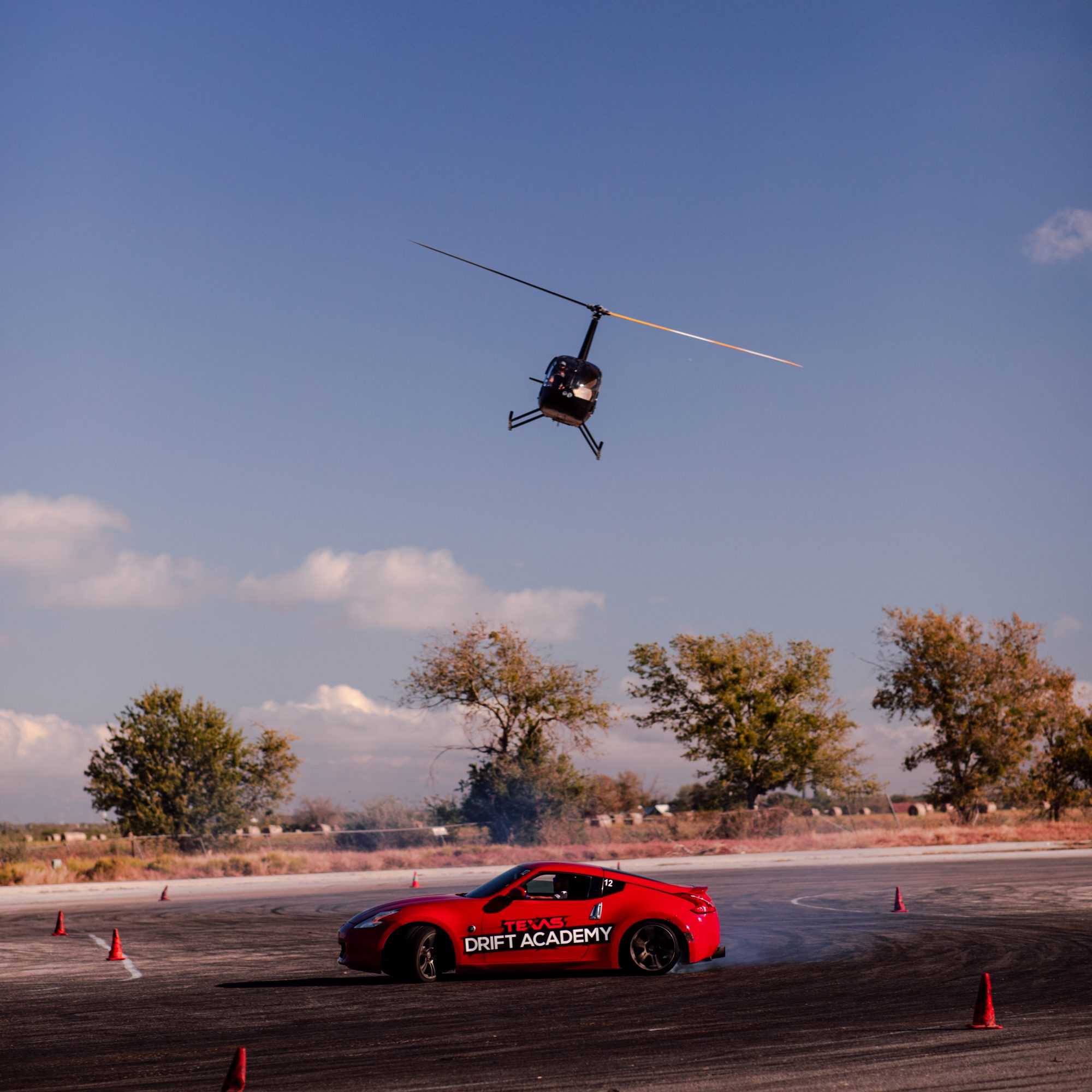
In that sense, mastery becomes the real luxury. Ownership is visible. Skill is not. It shows up in calm hands, early decisions, and a driver who works with the car instead of fighting it.
That is why so many owners eventually seek environments designed not to impress, but to teach. Places where the focus is on understanding vehicle behavior, building control, and developing confidence that lasts long after the engine cools.
At Texas Drift Academy, that pursuit of mastery is the point. Not to push drivers to the edge for the sake of thrill, but to give them the tools to understand what their cars are capable of and how to access that capability deliberately, safely, and with intention.
For many drivers, that understanding becomes the most valuable part of owning an extraordinary car.
Plan your high performance driving experience at TDA
If you’re looking for the actual program — the cars, the coaches, the day — start here:
- High Performance Driving Experience at Texas Drift Academy — the full overview of what a TDA day looks like
- Austin Driving Experience — 60 to 90 minutes from downtown Austin
- San Antonio Driving Experience — 25 minutes from downtown San Antonio